
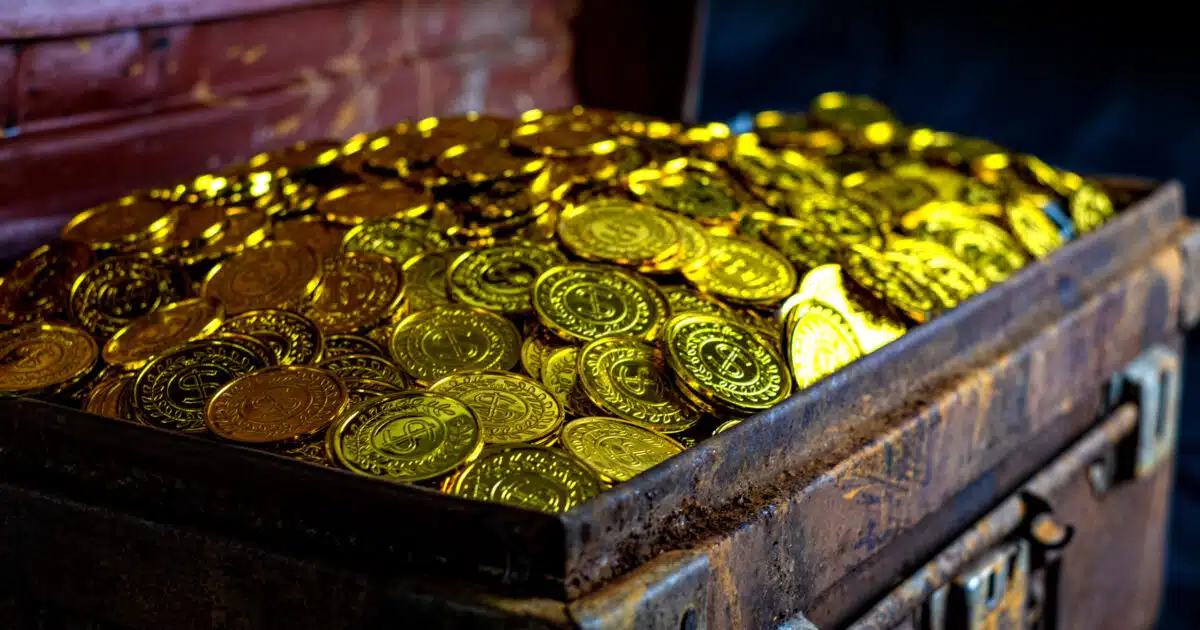
A team of expert divers from 1715 Fleet-Queens Jewels LLC has pulled more than 1,000 gold and silver coins from a 310-year-old Spanish shipwreck off the coast of Florida, with the recovered treasure valued at approximately one million dollars. The find rewrites what we know about colonial-era trade networks and reminds us that the seafloor off Florida's Treasure Coast still holds extraordinary secrets.
It started, as so many remarkable discoveries do, with patience and technology. Underwater drones swept the ocean floor, metal detectors pinged anomalies buried beneath centuries of sand, and a dedicated crew of divers began the slow, methodical work of uncovering one of the most significant maritime finds in recent memory. The result is a haul that connects the present directly to the collapse of a Spanish fleet in 1715, a catastrophe that reshaped an entire coastline.
Florida's so-called Treasure Coast didn't earn its name by accident. The region owes that identity to this very disaster, and the latest recovery proves the seabed there is far from exhausted.
The 1715 fleet disaster and what sank nearly a dozen ships
In 1715, a fleet of Spanish vessels departed South America loaded with precious metals destined for European royal treasuries. Gold and silver mined from colonial operations across the continent had been consolidated aboard these ships, making the convoy one of the most valuable ever to cross the Atlantic. But the fleet never completed its journey. A powerful hurricane intercepted the armada off the Florida coast, sending nearly 12 ships to the bottom of the ocean in a single catastrophic event.
A colonial commercial network frozen in time
The coins recovered by 1715 Fleet-Queens Jewels LLC carry mint marks from Madrid, Mexico City, and Lima, three nodes in a vast colonial economic system that stretched from Andean silver mines to European counting houses. Each mark tells a fragment of a larger story: how raw material extracted in South America was struck into currency, moved through Caribbean ports, and funneled toward royal coffers thousands of miles away. Historians studying these artifacts can now reconstruct supply chains and monetary policies that were previously only partially documented.
The wreck also sheds light on colonial smuggling strategies. Researchers have noted that the distribution of coin types and their minting origins suggests deliberate diversification, possibly to obscure the full value of the cargo from customs officials or rival powers. For academic institutions and museum curators, this is the kind of primary evidence that no archive can fully replace.
Spanish ships lost to a single hurricane in 1715 off Florida’s coast
How the recovery team pulled $1 million in treasure from the seafloor
The operation mounted by 1715 Fleet-Queens Jewels LLC was anything but improvised. Recovering gold and silver coins from a wreck site that has spent three centuries under shifting sand requires a combination of engineering precision and archaeological discipline.
Underwater technology at the core of the operation
The team deployed underwater drones to map the seafloor and identify metallic anomalies before a single diver entered the water. Once target zones were established, metal detectors refined the search, narrowing the field to specific areas worth excavating. The actual extraction relied on controlled suction systems that removed sand layer by layer, a technique that preserves the stratigraphic context rather than simply vacuuming up whatever lies beneath.
Every stage of the process was documented meticulously. Photographs, coordinates, and object logs were compiled in real time, ensuring that the recovery met both legal requirements and the standards expected by the academic community. This level of rigor matters because the coins themselves are only part of the story. Their precise location relative to each other and to the ship's structure carries information that careless extraction would destroy permanently.
Under Florida state law, approximately 20% of all treasure recovered from shipwrecks in state waters goes directly to the State of Florida. The remaining portion is divided between the primary recovery company and any subcontractors involved in the operation.
A split between profit and preservation
Florida law is clear on how the spoils are divided. Roughly 20% of the recovered treasure goes to the state, with the remainder split between the recovery company and its subcontractors. But beyond the financial allocation, the team has committed to directing a significant portion of the artifacts toward museum collections and academic research. The goal isn't purely commercial. These coins, fragile and encrusted after 310 years on the ocean floor, are treated as historical documents as much as monetary objects.
This dual purpose, profit and preservation, defines the modern approach to underwater archaeology, and it stands in contrast to the treasure-hunting free-for-alls that characterized earlier decades of wreck exploration. Just as scientists working to push the boundaries of what's recoverable from the deep past face questions about stewardship and responsibility, so too do the crews working Florida's shipwreck sites.
A theft inside the team and the security risks of high-value discoveries
Not everything about this story is triumphant. In 2024, a theft was reported within the recovery operation itself. Someone close to the team, a person with insider access, stole artifacts from the site. The incident was reported to authorities, but it exposed a vulnerability that the industry rarely discusses openly.
In 2024, a person with close ties to the recovery team stole artifacts from the operation. The case highlighted the security risks inherent in high-value underwater treasure recovery, where physical remoteness and small crew sizes create significant vulnerabilities.
When a recovery site is worth one million dollars, and when the objects being pulled from the water are both financially and historically irreplaceable, the temptation is obvious. But the consequences extend beyond the monetary loss. A stolen coin that disappears into a private collection is a coin that can no longer be studied, dated, or cross-referenced with other finds. It becomes a gap in the historical record rather than a contribution to it.
The theft also raises broader questions about how recovery operations manage chain of custody, particularly in remote offshore environments where oversight is difficult. The 1715 Fleet-Queens Jewels LLC team's transparent allocation process and meticulous documentation were clearly not enough to prevent the breach entirely. The incident will likely push the industry toward stricter protocols and possibly independent monitoring of high-value sites.
What the Treasure Coast still holds beneath the surface
The 1715 fleet shipwreck off Florida's coast is not a closed chapter. Three centuries of storms, currents, and shifting sediment have scattered debris across a wide area, and experts believe substantial portions of the original cargo remain unrecovered. The Treasure Coast designation applies to a stretch of coastline that continues to yield finds, and the latest $1 million gold and silver coin recovery is almost certainly not the last significant discovery from this disaster.
What makes this moment particularly compelling is the convergence of advanced recovery technology, rigorous legal frameworks, and genuine academic interest. The underwater drones, the suction systems, the drone cartography, and the meticulous documentation represent a generational leap from the rough salvage operations of earlier decades. And the commitment to sending artifacts to museums rather than auction houses signals a maturation in how the industry thinks about its own work.
The 1715 hurricane erased a fleet in hours. But it also created an archive, one that divers are still reading, coin by coin, from the floor of the Atlantic.