
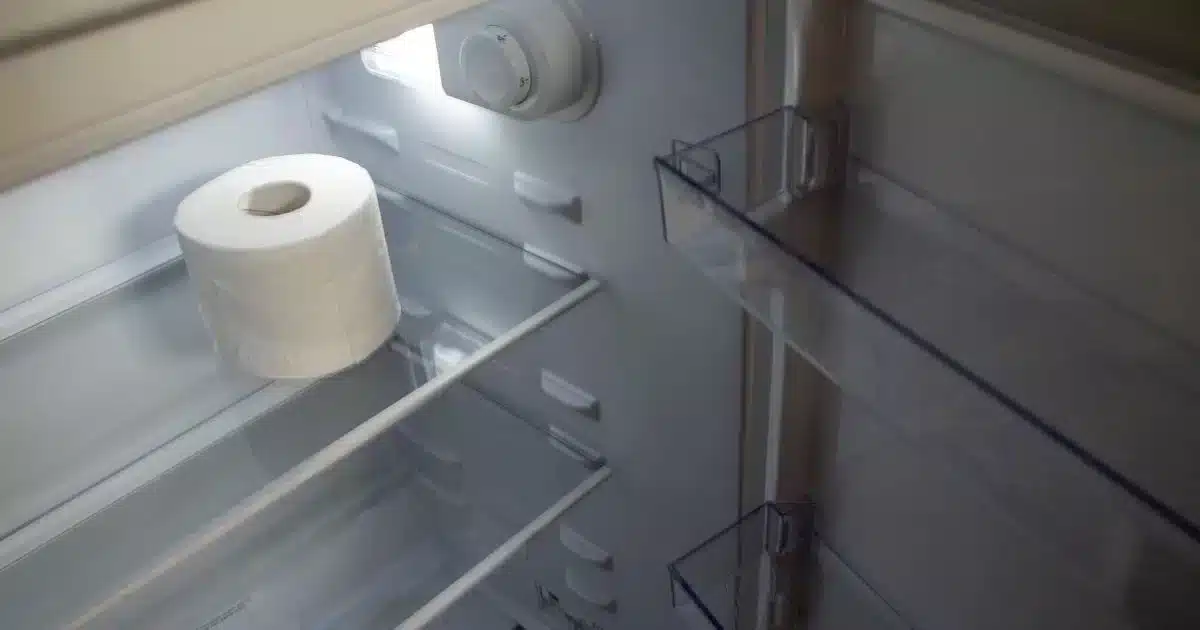
A single roll of toilet paper placed inside your fridge can absorb excess moisture, prevent frost buildup, and reduce your electricity bill. Jonathan Coni, a popular TikTok influencer known for everyday life hacks, made this trick go viral, and the results are turning heads in households everywhere.
It sounds absurd at first. Toilet paper belongs in the bathroom, not next to your leftovers. But the science behind this simple trick is surprisingly solid, and thousands of people who’ve tried it report real, tangible improvements in how their fridge performs and how long their food lasts.
The toilet paper in the fridge trick, explained
The key to understanding why this works lies in what toilet paper is actually made of. Standard rolls are composed of cellulose wadding (ouate de cellulose in French), a material that is naturally highly absorbent. That same quality that makes it useful in the bathroom makes it an effective moisture trap inside a refrigerator.
Every time you open your fridge, warm, humid air rushes in. Over time, that moisture accumulates on surfaces, forms condensation, and eventually contributes to frost buildup on the walls and shelves. Frost forces the compressor to work harder, which drives up energy consumption. A simple roll of toilet paper, sitting quietly on a shelf, intercepts that moisture before it becomes a problem.
Why moisture control matters for your fridge
Excess humidity inside a refrigerator does more damage than most people realize. It accelerates the spoilage of fruits and vegetables, encourages the growth of mold, and creates the kind of damp environment that produces persistent bad smells. By absorbing that excess moisture continuously, the toilet paper roll acts as a passive dehumidifier, no batteries or special equipment required.
Reduced compressor cycles are one of the most direct consequences. When the interior stays drier, the fridge doesn’t have to work as hard to maintain its target temperature. Over weeks and months, that translates into a measurable reduction in electricity consumption, even if no precise figure has been attached to the savings yet.
How to place the roll correctly
Placement matters. Jonathan Coni recommends putting the roll on a clean, dry shelf, preferably toward the back or side of the fridge, where air circulates freely. The roll should never be placed directly against wet surfaces, because contact with standing moisture will saturate it almost immediately, defeating the purpose entirely.
One roll is enough to see noticeable improvements. But the trick only works if you stay on top of maintenance: check the roll every few days and replace it as soon as it feels damp or fully saturated. A soaked roll stops absorbing and can itself become a source of odor if left too long.
Never use scented toilet paper rolls inside your fridge. The fragrances can transfer directly to your stored food, affecting taste and smell in ways that are hard to reverse.
The door seal trick that pairs perfectly with this hack
Jonathan Coni doesn’t stop at the toilet paper. He also recommends a complementary technique for anyone dealing with a fridge that seems to lose cold air faster than it should: the hair dryer method for door seals.
Over time, the rubber gaskets that line the fridge door become rigid, cracked, or deformed. When they no longer sit flush against the frame, cold air escapes continuously, forcing the compressor into overdrive. Most people assume this means an expensive repair or a full appliance replacement. But in many cases, a standard hair dryer can solve the problem.
Reviving stiff or warped door gaskets
The process is straightforward. Apply gentle heat from the hair dryer along the length of the seal, moving slowly and keeping a safe distance to avoid melting the rubber. The warmth softens the material, allowing it to return closer to its original shape. Once the gasket cools, it should sit more snugly against the door frame, restoring a proper seal.
Regularly inspecting the door joints is a habit worth building. A quick visual check every month can catch early deformation before it becomes a serious efficiency problem. Combined with the toilet paper moisture trick, these two low-cost interventions address two of the most common causes of fridge inefficiency at the same time.
To test whether your door seal is working properly, close the fridge door on a piece of paper. If you can pull the paper out easily, the gasket has lost its grip and needs attention.
Good habits that amplify the results
The toilet paper trick works best when the rest of your fridge habits support it. One of the most overlooked factors in refrigerator efficiency is air circulation. Overpacking shelves blocks airflow, creates warm spots, and makes the compressor work harder to maintain an even temperature throughout the compartment.
Leaving adequate space between items, particularly around the back wall where the cooling coils typically sit, allows cold air to distribute uniformly. This reduces temperature fluctuations, which in turn slows down food spoilage. Less spoilage means less food waste, which has a direct impact on the household grocery budget.
of standard toilet paper is enough to deliver noticeable results inside a standard refrigerator
The combination of moisture absorption, proper door sealing, and good airflow management creates a system where each element reinforces the others. The fridge runs more efficiently, food stays fresh longer, odors are kept in check, and the electricity meter slows down slightly with each passing week. None of these changes require a significant financial investment. A roll of unscented, high-absorbency toilet paper costs almost nothing. A hair dryer is already in most homes. And the habit of not overcrowding shelves costs nothing at all.
What makes Jonathan Coni’s approach compelling isn’t any single trick in isolation. It’s the recognition that small, consistent interventions on an appliance most people completely ignore can add up to real savings over time. The fridge runs every hour of every day, and even marginal improvements in how it operates compound quietly in the background. That’s the kind of result that’s hard to argue with.